Showing posts with label sexuality. Show all posts

Sunday, June 19, 2011

Objectophilia - in love with objects

Objectophilia (object sexuality or objectum sexuality) can be defined as an emotional and romantic desire towards different objects. Those with objectophilia can feel attraction, love, and can even commit to the objects that become their partners. Some of these individuals believe in animism and consider that non-human entities are spiritual beings. 
 
They don’t describe themselves as fetishists because they don’t use the objects to enhance their sexual pleasure, the objects are the only thing they desire and they fall in love with them.

You probably heard of the woman who married the Eiffel Tower . It seems that her love for objects began with Lance, a bow; then she moved on to a piece of fence which is currently her partner. However, she always loved the Eiffel Tower and she changed her name to show the whole world how much she loves it. Then, there’s the woman who married the Berlin Wall. She is now 54 years old and she married the wall in 1979. It seems that her love for the wall began when she first saw it on TV, then she just started collecting pictures with her future “husband”. But she hasn’t visited her husband since part of it was destroyed in 1989. Nowadays, she is in a loving relationship with a garden fence.

Another woman, in love with the Twin Towers, declares that "when it comes to love, I am only attracted to objects. I couldn't imagine a love affair with a human being".  Fortunately for her she has a model of the Twin Towers. They are made from anodized aluminium and the advantage is that they don’t rust when she takes a bath with them. The same article tells the story of Joachim A. who was in a relationship with a Hammond organ, but now “he has now been in a steady relationship with a steam locomotive for several years. He admits that he has been unfaithful over the years because "a love affair could very well begin with a broken radiator”.

An article in the Electronic Journal of Human Sexuality, written by Amy Marsh argues that objectophilia is not a paraphilia but a sexual orientation. Here’s the paragraph:

Based on statements made by objectum sexuals and on the research discussed in this article, it appears that objectum sexuality can be distinguished from a simple paraphilia by its complex array of emotional and affectionate qualities, in addition to its sexual characteristics. The most striking feature of this research was the discovery of the array of emotions and depth of connection that OS people feel for their objects. Judging from the thoughts expressed in open-ended responses, OS appears to be a genuine - though rare - sexual orientation. The emotions and experiences reported by OS people correspond to general definitions of sexual orientation. For example, an article on sexual orientation and homosexuality, published on American Psychological Association Help Center website, refers to sexual orientation as involving “feelings and self concept.” If references to human lovers were stripped from this particular article, it would dovetail with the experiences and feelings described by OS people.

For further reading and stories you can go on http://objectum-sexuality.org/

Is objectophilia a paraphilia, a disorder, a sickness? People who claim to have it also say that they couldn't fall in love with a human being because they don't feel attracted to them. On the other hand, attraction is not the only thing that defines love and when it comes to other needs like communicating and emotional support it can be really hard to obtain those from an object. Or maybe these people have found a new meaning to unrequited and unconditional love. 

Monday, June 13, 2011

5 Weird Fetishes (Part II)

This is part II of my recent article Weird Fetishes I and because people gain pleasure from a lot of weird stuff, I guess it’s going to be an entire series of articles. I was very busy lately so my articles were quite short, but I guess the 5 people who actually read my blog don't mind :).  Anyway, our first paraphilia is…

This looks like a Sex Shop for a hierophiliac.
Source
1. Hierophilia or theophilia involves sexual attraction to religious and sacred objects: fantasies, urges to use religious objects and sexual preference for sacred or religious objects. So, if you ever had fantasies with a cross or other religious objects, you probably have hierophilia. 


Man, look at those sexy branches!
Source
2. Dendrophilia  – while tree huggers are just romantic people who like to bond with trees and enjoy nature, a dendrophiliac just likes having sex with trees. Yep, they get aroused by tall, big, beautiful…trees.


Yep, a frotteurist playground.
Source
3. Frotteurism refers to the act of rubbing yourself against someone without their consent (and enjoying it too). Most of us who use public transport know what that means, a creepy guy rubbing himself against us and smirking during the process.


Back off buddy! This is my boob!
Source
4. Erotic lactation is not that hard to figure out as it is the arousal one gets from being breastfed. If you are fighting with your newborn child for your wife’s milk, you are a lactophiliac.


This was invented by a piquerist. 
5. Piquerism is a “subfetish” of sadomasochism in which a person finds sexual pleasure from penetrating another person with sharp objects. Stabbing and cutting in areas like breasts, buttocks or groin are the most frequent “bedroom activities” when it comes to this fetish. 

Friday, June 10, 2011

Postcoital Dysphoria - When sex brings you down

Source
Postcoital dysphoria can be defined as sadness after having sex. While most people are happy after they had sex with someone, those who have postcoital dysphoria can become quite depressed. Actually you can experience irritability, extreme sadness, melancholy, anxiety, and even shame or guilt. It seems that 32.9 percent of women had this issue at one point in their life and 10 percent of those declared that they have been struggling with the issue many times or most of the time in their life.  However, when a person had postcoytal dysphoria all their life it could be a sign of childhood abuse or a personality disorder.

It seems that this problem is common in both sexes (while in some sources it is stated that it can be more common in men than in women) and it may occur more when engaging in adulterous sex or sexual intercourse with a prostitute. Other factors may be: hormonal shift after sex, unresolved issues with the partner, stress, general anxiety, or depression. Even the fear of getting a sexual transmitted disease could contribute to postcoital dysphoria.  
  
If you experience postcoital dysphoria you should discuss your feelings with your partner; if you don't have a partner or you have multiple partners, you should at least talk with a psychologist and see how, when and why your postcoital dysphoria issue started.

Sunday, May 29, 2011

Red Riding Hood - A story about sexuality?


Source
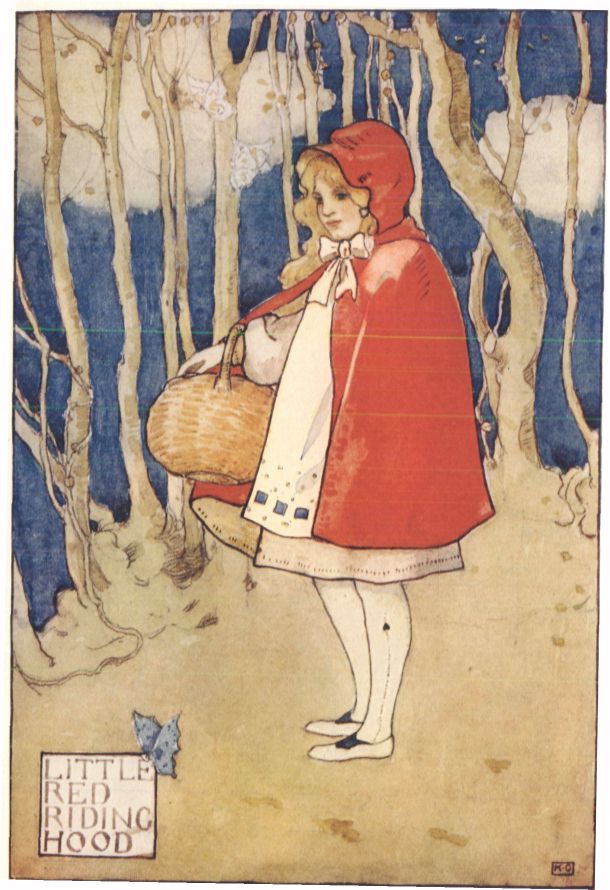
The Little Red Riding Hood, a story we all remember from our childhood, but it seems that there’s more to be discovered about it, especially when it comes to human psychology. There are many versions of our favorite tale: in one, the girl doesn’t escape after being eaten by the wolf, in other versions she is rescued by a hunter or woodcutter in the woods along with her grandma. What’s interesting about it, is the fact that there are several Red Riding Hood stories in the world. You can read one of the earliest versions in this amazing essay.  (this version includes her stripping and going to bed with the wolf). Also, we can see that medieval fascination about werewolves played a big part in a lot of tales. It seems that some men were convicted for being werewolves just as women were for witchcraft.

The story appeared in Charles Perraut’s collection of fairy tales Histoires et contes du temps passé, avec des moralités. Contes de ma mère l'Oye and he states at the end : 

Children, especially attractive, well bred young ladies, should never talk to strangers, for if they should do so, they may well provide dinner for a wolf. I say "wolf," but there are various kinds of wolves. There are also those who are charming, quiet, polite, unassuming, complacent, and sweet, who pursue young women at home and in the streets. And unfortunately, it is these gentle wolves who are the most dangerous ones of all.

Even this remark makes us think that Red Ridding Hood is not what we were taught to believe.
Anthropologists argue that the Red Riding Hood is actually a story about sexual predators. Professor Jack Zipes says:

Little Red Riding Hood is about violation or rape, and I suspect that humans were just as violent in 600BC as they are today, so they will have exchanged tales about all types of violent acts.

There are several symbols in the story and the most prominent is the red cape.
Some authors believe that the red cape is a symbol of sexuality or reaching adulthood as a woman (menstrual blood).

The wolf could also be a metaphor for a man who wants to abuse the innocent girl; it can also be a symbol of other immoral distractions from “the right path”. Also, the fact that the wolf invites the girl into the bed with him might support this assumption.

Image taken from here.

Although a somehow macabre story, The Little Red Riding Hood shows important elements of collective psychology (and opinions that were generally shared by people in those times): young unaware girls can be easily fooled, the mysterious forest(perhaps a symbol of life) is full of temptations and danger, acting against the elder’s advice might lead to disastrous consequences, a woman’s struggle to keep her innocence, and the fact that strangers can be deceiving.

For a politically correct Little Red Riding Hood you can check out this link. :)